Introduction
Businesses need to understand the latest Digital Marketing Trends in 2026 to remain competitive in the digital world.
From AI-powered marketing tools to short-form videos and personalized customer experiences, modern marketing offers many opportunities for businesses of every size. Small businesses, startups, online stores, and large companies can use these trends to improve brand awareness, attract website visitors, and generate more leads.
Understanding digital marketing trends also helps marketers create better campaigns, improve customer engagement, and use advertising budgets more effectively.
In this article, we will explore 10 powerful Digital Marketing Trends in 2026, their benefits, and how businesses can use them to achieve better results. Copy this line
The latest Digital Marketing Trends in 2026 offer new opportunities for businesses to improve their online presence and attract more customers.
1. Artificial Intelligence in Digital Marketing
Artificial intelligence is one of the most important digital marketing trends in 2026. AI tools help marketers complete tasks faster, understand customer behaviour, generate content ideas, and improve marketing campaigns.
Businesses can use AI-powered tools for content creation, keyword research, customer support, email marketing, and advertising optimization. These tools can analyse large amounts of data and help marketers make informed decisions.
For example, an online clothing store can use AI to recommend products based on customers’ interests. A digital marketing agency can use AI tools to generate blog topic ideas, prepare advertising drafts, and analyse campaign performance.
However, AI-generated content should always be reviewed by humans. Marketers need to check facts, improve readability, add original insights, and make sure the content provides real value to readers.
Benefits of AI in Digital Marketing
- Saves time on repetitive marketing tasks.
- Helps generate content and campaign ideas.
- Supports personalized customer experiences.
- Helps analyse marketing data.
- Improves customer support through chatbots.
Businesses should use AI as a supporting tool rather than relying on it completely. Human creativity, experience, and customer understanding remain essential for successful marketing.
Businesses can use Digital Marketing Trends in 2026 to improve marketing efficiency and create better customer experiences.
2.10 Powerful Digital Marketing Trends in 2026 to Grow Your Business
Search engine optimization remains an important strategy for businesses that want to increase organic website traffic. SEO helps websites appear in search engine results when people search for relevant products, services, and information.
In 2026, businesses should focus on useful content, search intent, website performance, and a positive user experience. Search is also expanding beyond traditional results pages, with AI-powered search experiences providing summarized answers and links to relevant sources.
To improve search visibility, websites should publish accurate, original, and helpful information. Content should answer the questions that customers actually ask.
For example, a digital marketing agency in Delhi could publish articles about local SEO, Google Ads, website optimization, and social media marketing.
Important SEO Practices for 2026
- Research relevant keywords before writing content.
- Include the primary keyword naturally in the title and introduction.
- Write descriptive meta titles and meta descriptions.
- Use clear headings and short paragraphs.
- Optimize images with descriptive alt text.
- Improve website speed and mobile usability.
- Add relevant internal and external links.
- Update old articles with accurate information.
- Use Google Search Console to monitor performance.
Businesses should avoid keyword stuffing because repeating the same keyword excessively can make content difficult to read. The main goal is to satisfy the user’s search intent and provide useful answers.
SEO is a long-term strategy. Consistent publishing, technical improvements, and quality content can help businesses build sustainable organic visibility.
Understanding Digital Marketing Trends in 2026 can help businesses create useful content and improve their online visibility.
3. Short-Form Video Marketing
Short-form video marketing continues to be an important way to capture audience attention. Platforms such as Instagram Reels, YouTube Shorts, and TikTok in supported markets allow businesses to share short, engaging videos.
People often prefer quick and easy-to-understand content. Short videos can demonstrate products, explain services, answer frequently asked questions, and show the people behind a brand.
For example, a digital marketing agency can create a 30-second video explaining the difference between SEO and Google Ads. An online store can show how to use a product or share customer reviews.
How to Use Short-Form Videos
- Start with an interesting opening.
- Focus on one clear topic per video.
- Use readable captions and on-screen text.
- Show useful information instead of only promoting products.
- Include a relevant call to action.
- Review video performance and audience engagement.
Businesses should create videos that match their audience’s interests rather than following every trend. Educational videos, tutorials, behind-the-scenes clips, and demonstrations can help build trust.
Short-form video marketing can increase brand awareness and bring visitors to a website when the content is relevant and engaging.
4. Social Media Marketing and Community Building
Social media marketing allows businesses to connect directly with customers, promote products, answer questions, and build long-term relationships.
In 2026, businesses should focus on meaningful interactions rather than simply counting followers. An engaged audience is more likely to remember a brand, ask questions, share content, and consider its products or services.
Platforms such as Instagram, Facebook, LinkedIn, and YouTube serve different audiences and marketing purposes. Businesses should select platforms based on their goals and target customers.
For example, a fashion business may use Instagram to showcase new collections, while a business-to-business company may use LinkedIn to share industry insights and connect with professionals.
Social Media Marketing Tips
- Publish content consistently.
- Respond to comments and direct messages.
- Share educational posts and useful tips.
- Use stories, reels, polls, and question stickers where appropriate.
- Encourage genuine customer feedback.
- Analyse reach, engagement, clicks, and conversions.
- Maintain consistent branding across platforms.
Businesses should also develop a content calendar to plan their posts in advance. A balanced content strategy can include educational content, entertainment, customer stories, and promotional offers.
Social media marketing works best when businesses listen to their audience and create content that solves real problems.
These Digital Marketing Trends in 2026 can help businesses build stronger relationships with their target audience.
These Digital Marketing Trends in 2026 help brands connect with their target audience through useful and engaging content.
5. Personalized Marketing and Customer Experience
Personalized marketing means delivering relevant messages, offers, and recommendations based on customers’ interests and interactions.
Customers often respond better to information that matches their needs. Businesses can use appropriate customer data to improve email campaigns, recommend products, and create more relevant website experiences.
For example, an online bookstore might recommend books based on a customer’s previous purchases. A clothing website might send an email about a new collection that matches a customer’s stated preferences.
Ways to Improve Personalization
- Segment email subscribers according to their interests.
- Send relevant messages to different customer groups.
- Recommend related products when appropriate.
- Create landing pages for specific customer needs.
- Use customer feedback to improve services.
- Respect privacy and obtain consent where required.
Personalization should not feel intrusive. Businesses must handle personal information responsibly and follow applicable privacy and data-protection rules.
When done properly, personalized marketing can improve customer satisfaction, encourage repeat purchases, and help businesses build stronger relationships with their audiences.
6. Influencer Marketing and User-Generated Content
Influencer marketing allows businesses to collaborate with content creators who have an audience relevant to their products or services. These creators can introduce brands through reviews, demonstrations, tutorials, and sponsored posts.
Businesses are not always required to work with celebrities or creators with millions of followers. Smaller creators may have focused audiences and strong engagement within a particular niche.
For example, a skincare brand might collaborate with a beauty creator who shares product demonstrations. A local restaurant could work with a food creator who reviews nearby places.
User-generated content (UGC) is another useful approach. It includes content created by customers, such as product photos, testimonials, reviews, and videos.
Benefits of Influencer Marketing
- Helps introduce a brand to new audiences.
- Provides opportunities for product demonstrations.
- Can build trust when recommendations are genuine.
- Encourages customer participation.
- Creates content for social media campaigns.
Before choosing an influencer, businesses should review audience relevance, content quality, engagement patterns, and previous collaborations.
They should also agree on deliverables, campaign objectives, usage rights, and performance measurements. Paid partnerships should be disclosed clearly in accordance with applicable advertising rules.
Influencer marketing is most effective when the creator’s audience and values align with the brand.
7. Performance Marketing and Data-Driven Advertising
Performance marketing focuses on measurable actions such as website visits, leads, app installations, purchases, and other conversions. Businesses can use paid advertising platforms to reach specific audiences and evaluate campaign results.
Google Ads and Meta Ads are common options for businesses that want to promote products or services online. Google Ads can help reach people searching for particular products or solutions, while Meta Ads can help businesses discover audiences across supported social platforms.
The right advertising platform depends on the business’s objectives, customers, budget, and buying journey.
How to Improve Advertising Performance
- Set a clear campaign objective.
- Define the target audience.
- Research keywords or audience interests.
- Write relevant headlines and descriptions.
- Use strong landing pages.
- Install and verify appropriate conversion tracking.
- Test different creatives and messages.
- Monitor cost per lead, conversion rate, and return on ad spend.
For example, a digital marketing agency could create a Google Search campaign targeting people looking for digital marketing services in Delhi. The campaign could direct visitors to a landing page containing the agency’s services, benefits, contact information, and a clear enquiry form.
Businesses should avoid judging advertising success only by impressions or clicks. They should measure whether campaigns produce valuable enquiries, sales, or other meaningful outcomes.
Data-driven marketing helps businesses understand which campaigns work and where improvements are needed.
8. Voice Search and Conversational Queries
Voice-enabled devices and digital assistants have changed how some people search for information. Instead of typing short phrases, users may ask complete questions, such as, “Which digital marketing agency can help my small business?”
Businesses can prepare for conversational searches by creating clear, informative content that answers common customer questions.
Voice Search Optimization Tips
- Include natural-language questions in relevant content.
- Create a useful frequently asked questions section.
- Keep business information accurate.
- Improve mobile website usability.
- Use descriptive headings.
- Apply relevant structured data where appropriate.
- Focus on local SEO if the business serves a specific area.
For a local business, maintaining an accurate Google Business Profile can help customers find its address, opening hours, services, and contact details.
Voice search optimization should be part of a broader SEO strategy rather than a replacement for other search optimization practices.
9. Email Marketing and Marketing Automation
Email marketing remains a useful way to communicate with interested customers. Businesses can send newsletters, product updates, educational content, offers, and follow-up messages to people who have chosen to receive them.
Marketing automation allows certain messages to be sent based on customer actions or predefined conditions.
For example, an online store might send an order confirmation automatically. A service business might send a welcome email after someone subscribes to its newsletter.
Email Marketing Best Practices
- Build an email list through legitimate, consent-based methods.
- Write clear and relevant subject lines.
- Personalize messages when appropriate.
- Make emails mobile-friendly.
- Include one main call to action.
- Test links before sending campaigns.
- Monitor clicks, conversions, and unsubscribe rates.
- Provide a clear unsubscribe option.
Automation can save time and make communication more consistent. However, businesses should avoid sending excessive or irrelevant messages.
Useful email content helps maintain customer relationships and encourages repeat engagement over time.
10. Website User Experience and Conversion Optimization
A website is often one of the first places where potential customers learn about a business. A slow, confusing, or difficult-to-use website can discourage visitors from taking action.
In 2026, businesses should focus on making their websites fast, mobile-friendly, accessible, and easy to navigate.
A good website should explain what the business offers, who it serves, and how visitors can contact it.
Website Optimization Tips
- Use a clean and easy-to-understand design.
- Make navigation simple.
- Improve loading speed.
- Ensure the website works on mobile devices.
- Use clear headings and readable fonts.
- Add relevant calls to action.
- Provide accurate contact details.
- Use secure connections and maintain website software.
- Test forms and important links regularly.
Conversion rate optimization involves improving website elements to encourage visitors to complete a desired action, such as submitting a form or purchasing a product.
Businesses can test different headlines, page layouts, calls to action, and forms to understand what works best for their audience.
A better website experience can support SEO, advertising performance, and customer satisfaction.
How Businesses Can Apply Digital Marketing Trends in 2026
Businesses do not need to adopt every new trend at once. A practical strategy should begin with clear objectives and an understanding of the target audience.
Businesses can apply Digital Marketing Trends in 2026 by choosing strategies that match their goals, audience, and budget.
First, identify the main business goal. It could be increasing website traffic, generating enquiries, improving online sales, or building brand awareness.
Second, choose the marketing channels that best support that goal. A local service provider might focus on local SEO and Google Ads, while an online store might prioritize product pages, social media videos, email marketing, and conversion optimization.
Third, create helpful and consistent content. Use analytics tools to measure results and identify areas for improvement.
Finally, test new approaches gradually. Review campaign performance, customer feedback, and business outcomes before investing more money.
By following Digital Marketing Trends in 2026, businesses can strengthen their marketing strategy and support long-term growth.
Conclusion
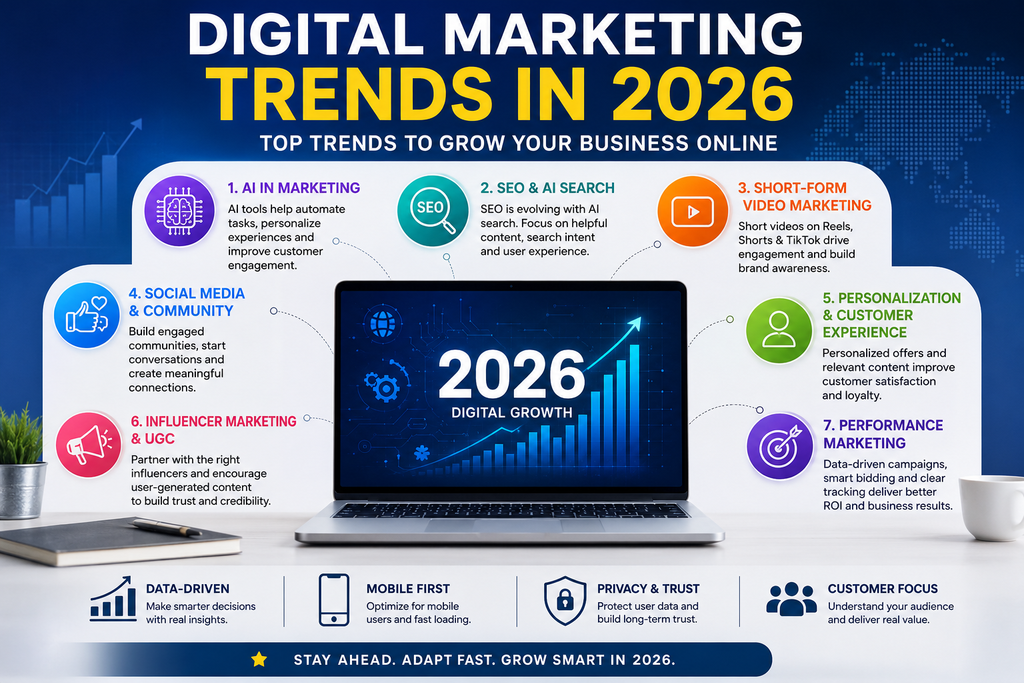
The most useful Digital Marketing Trends in 2026 include AI, SEO, short-form videos, social media, personalization, and performance marketing.
By applying the right Digital Marketing Trends in 2026, businesses can improve online visibility, attract relevant visitors, and generate leads.
Businesses can use these strategies to reach relevant audiences, improve their online visibility, generate leads, and build stronger customer relationships. However, successful digital marketing requires more than following trends. It depends on understanding customers, producing useful content, respecting privacy, and measuring results.
Start by choosing two or three trends that match your business goals. Improve your website, publish valuable content, test suitable advertising channels, and monitor performance regularly.
With a consistent strategy and continuous improvement, businesses can build a stronger online presence and create more opportunities for growth in 2026.
At Neha Marketing, our goal is to help businesses understand digital marketing and use practical online strategies to improve their digital presence. Explore our website for more information about SEO, Google Ads, social media marketing, and other digital marketing services.
VISIT MY HOMEPAGE
Frequently Asked Questions (FAQs)
1. What are the top digital marketing trends in 2026?
The top digital marketing trends in 2026 include artificial intelligence (AI), search engine optimization (SEO), short-form video marketing, social media marketing, personalized marketing, influencer marketing, and performance-based advertising.
2. How is AI changing digital marketing in 2026?
AI is helping businesses create content, analyse customer behaviour, automate marketing tasks, improve customer support, and develop personalized advertising campaigns. Human review remains important for accuracy and quality.
3. Why is SEO important for businesses in 2026?
SEO helps businesses improve their visibility in search engine results, attract relevant website visitors, build credibility, and reach potential customers who are searching for their products or services.
4. Is social media marketing still effective in 2026?
Yes, social media marketing can help businesses increase brand awareness, engage with customers, promote products, and generate leads through useful posts, short videos, and targeted advertising.
5. What is the role of video marketing in digital marketing?
Video marketing helps businesses explain products and services, share tutorials, demonstrate products, and connect with audiences through platforms such as Instagram Reels and YouTube Shorts.
6. How can small businesses use digital marketing trends in 2026?
Small businesses can focus on local SEO, social media content, Google Business Profile optimization, email marketing, and targeted advertising to reach relevant customers and grow their online presence.
7. What is performance marketing?
Performance marketing is a digital marketing approach that focuses on measurable results, such as website visits, leads, purchases, and app installations. Businesses use campaign data to evaluate and improve performance.
8. How can I increase website traffic in 2026?
You can increase website traffic by publishing helpful SEO-friendly content, improving website speed, targeting relevant keywords, sharing content on social media, earning quality backlinks, and using paid advertising where appropriate.
9. Is digital marketing a good career option in 2026?
Digital marketing can be a useful career option for people interested in SEO, Google Ads, social media management, content marketing, and analytics. Practical skills, real projects, and continuous learning can improve career opportunities.
10. How can Neha Marketing help businesses grow online?
Neha Marketing shares information about SEO, Google Ads, social media marketing, and online marketing strategies to help businesses understand digital marketing and strengthen their online presence.